
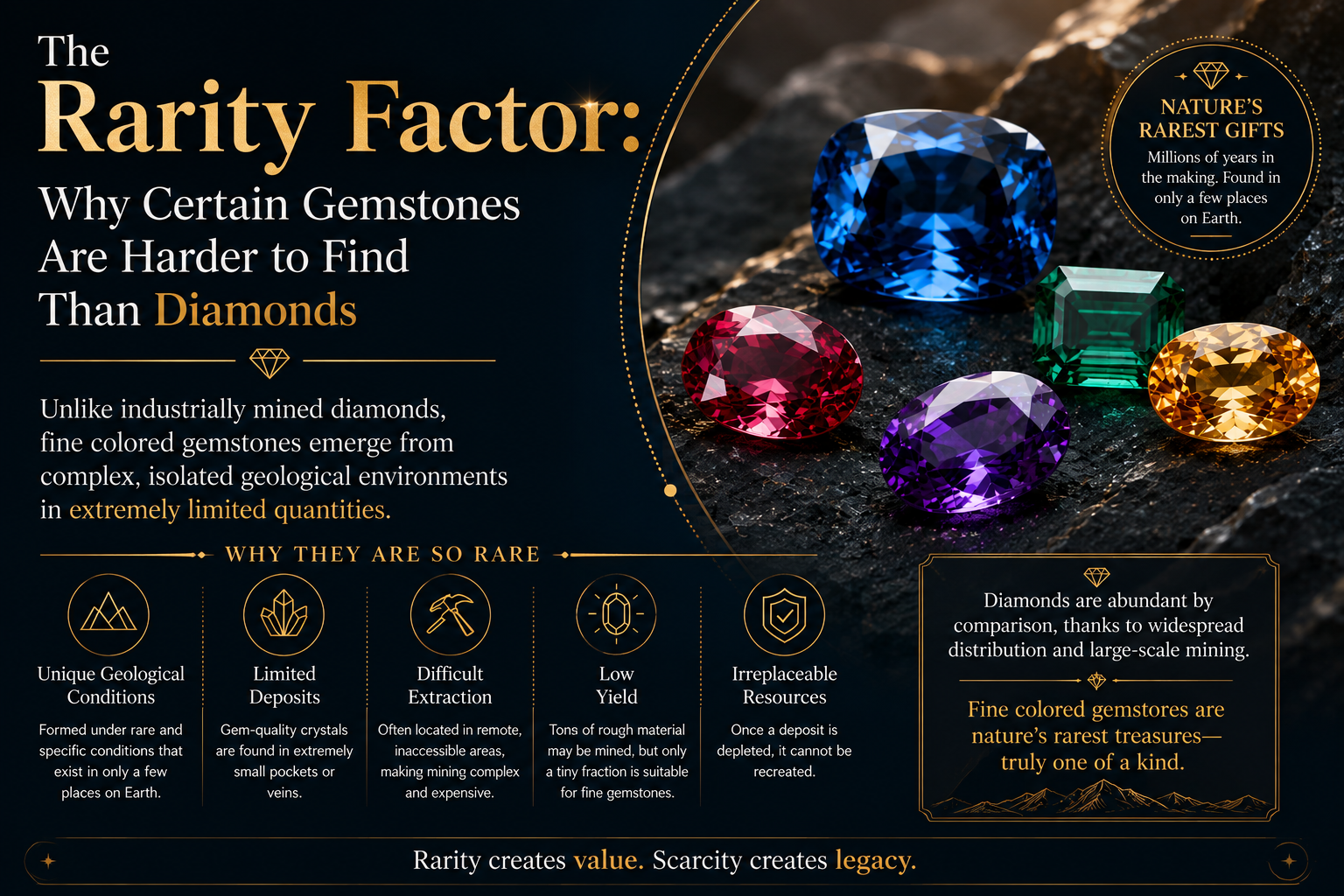
Challenging the Diamond Monopoly on Rarity
For decades, brilliant market marketing has convinced the world that diamonds are the rarest and most precious treasures on earth. While diamonds are indeed magnificent, seasoned collectors and geologists know a surprising truth: many fine colored gemstones are significantly scarcer and harder to find. At Silon Gems, we dive into the geological factors that make colored gemstones true anomalies of nature.
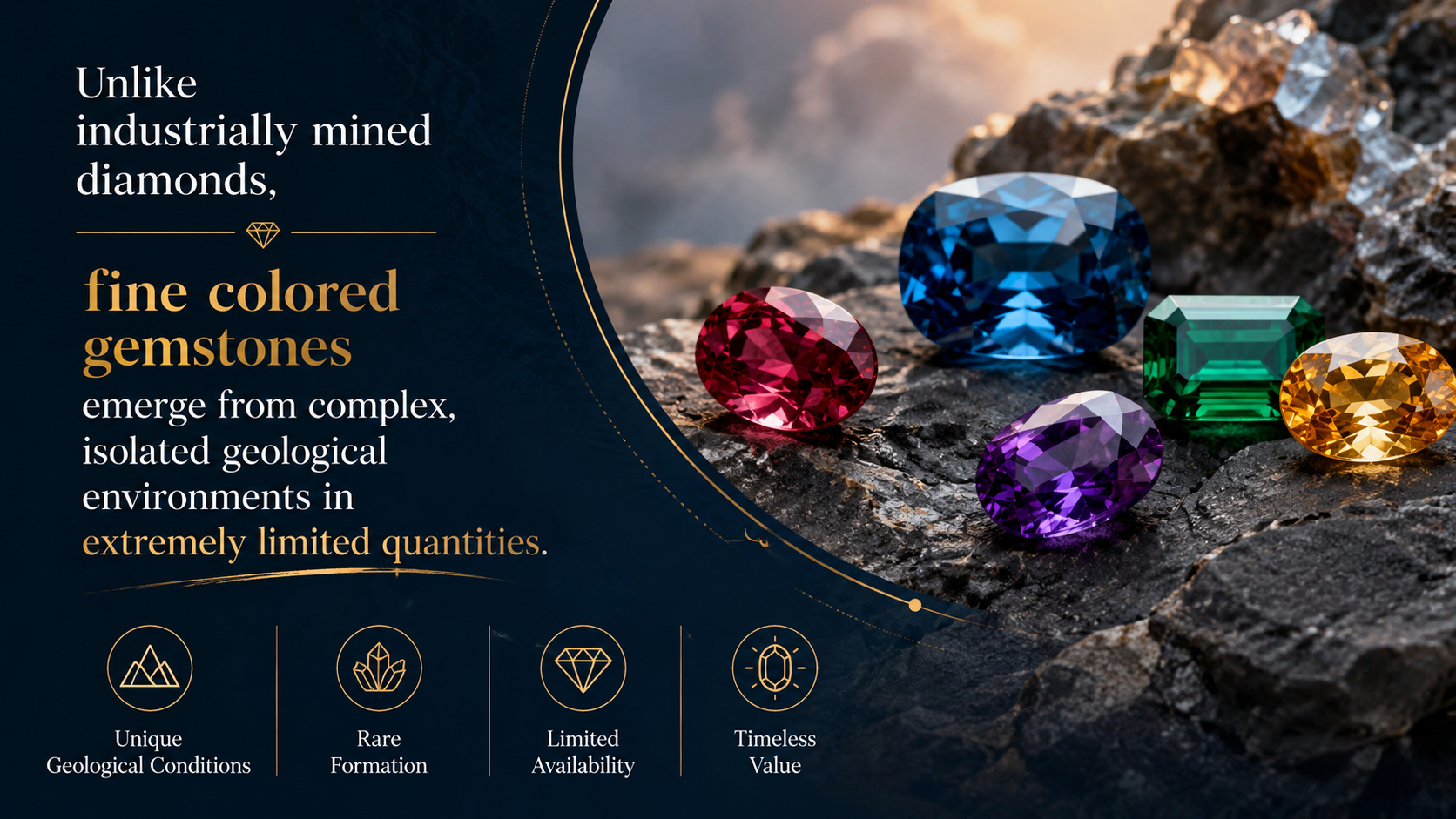
Unlike industrially mined diamonds, fine colored gemstones emerge from complex, isolated geological environments in extremely limited quantities.
The Scale of Production: Single Mines vs. Global Giants
One of the main reasons fine colored gemstones are rarer is the sheer scale of their extraction. Diamonds are mined in large industrial volume across multiple continents by massive corporate entities. In contrast, many exceptional colored stones such as fine Zambian emeralds, tourmalines, or kunzites come from small scale, artisanal mines in remote mountainous regions where extraction is labor-intensive and yields are strictly limited by nature.
Complex Geological Chemistry
Creating a diamond requires carbon and extreme pressure. However, creating colored gemstones requires a precise recipe of rare trace elements such as chromium for rubies, vanadium for emeralds, or copper for Paraíba tourmalines meeting under exact hydrothermal conditions. If even one element is missing, the gemstone does not form. This intricate chemical requirement makes high clarity colored stones exceptionally scarce.
The Value of Independent Certification
Because rare, untreated colored gemstones hold such exclusive value, verifying their authenticity is essential. Always ensure your rare acquisitions are backed by trusted GGI laboratory certification to confirm their natural origin and quality.
Final Verdict: Collect True Rarity with Silon Gems
Invest in nature's true masterpieces. Explore our exclusive collection of 100% natural, certified rare gemstones at Silon Gems today!