Introduction: Demystifying Gemstone Carat Weight
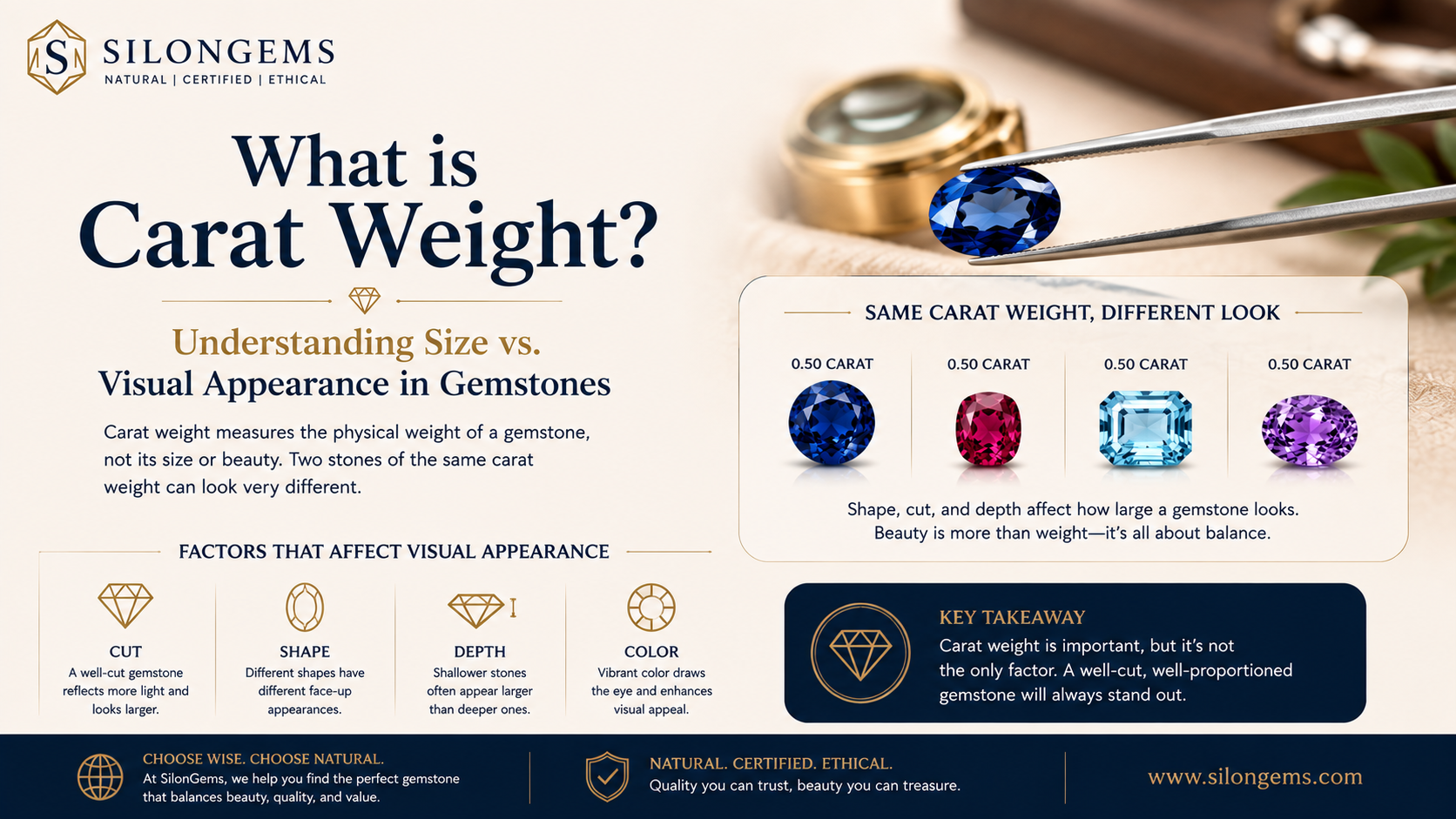
When shopping for fine jewelry, one of the first metrics buyers usually look at is the carat weight. Many people assume that a higher carat weight automatically means a bigger, more visually impressive gemstone. However, in the world of colored stones, physical weight and face-up visual size do not always match. At Silon Gems, we break down what carat weight truly means and how lapidary cuts influence what you see.
Understanding the balance between a gemstone's carat weight and its proportions ensures you select a stone that maximizes both presence and brilliance.
Weight vs. Spread: Why Two Stones Look Different
A carat is simply a unit of measurement for mass, equivalent to 200 milligrams. Because different mineral species have different densities, a 2-carat ruby will look physically smaller than a 2-carat tourmaline or quartz because ruby is a denser, heavier stone. Furthermore, how a lapidary cuts a stone matters immensely: a deep-cut pavilion hides weight underneath where you cannot see it, while a well-proportioned, shallow-spread cut maximizes the face-up surface area.
Choosing the Right Proportions for Custom Jewelry
When designing custom rings or pendants, prioritizing face-up appearance and balanced proportions is often more rewarding than chasing an arbitrary carat number. Inspecting millimeter dimensions alongside certified weight specifications gives you a true picture of the gemstone's actual presence.
Final Verdict: Shop Smart with Silon Gems
Get the best value and visual beauty with our 100% natural, ethically sourced, and fully certified gemstone collection at Silon Gems today!